
You can print a perfect banner and still ruin the result by hanging it badly. A banner that sags in the middle, flaps in the wind or tears at a corner looks worse than no banner at all — and it is entirely avoidable. Hanging a banner well comes down to the right fixings, even tension, and respecting the wind. This guide covers all three, for walls, fences and frames. It is part of our complete banner printing guide.
Start with the right finishing
Hanging is easier when the banner was finished for it. Before you hang anything, make sure your banner has:
- Hemmed edges — a folded, welded edge resists tearing at the fixing points.
- Eyelets (grommets) — metal rings every 30–50 cm around the edge, and always in the corners, to thread ties through.
- Reinforced corners for outdoor or windy spots.
If you tell us where a banner will hang when you order, we add the right finishing. A banner with eyelets in the right places is half-hung already — order from the banner range with that in mind.
What to fix it with
- Cable (zip) ties — fast, cheap and strong; the go-to for fences and temporary frames. Cut the tails.
- Bungee balls / elastic cords — give a little, so they absorb wind gusts instead of transferring the load to the eyelets; ideal outdoors.
- Rope or paracord — for tying to posts and railings; learn a simple taut-line hitch so you can re-tension.
- Banner clips / hooks — for walls and frames where you want a neat, repeatable fix.
Avoid fixing through the banner face (no nails or staples through the print) — always go through the eyelets.
Get it taut and even
A sagging banner reads as careless; a taut one looks professional. The trick is even tension all the way around:
- Fix the top two corners first, level with each other.
- Fix the bottom two corners, pulling gently down and out to remove sag.
- Work the remaining eyelets from the corners inward, keeping tension even — do not over-tighten one point or you will pull the banner crooked.
- Step back and check it is square and flat before finishing.
Two people make a large banner far easier and straighter.
Mounting to walls
On a wall, you have two routes: fix into the wall at each eyelet (screws with washers, or hooks into plugs), or run a cord through all the eyelets and around fixed points. For a permanent, tidy result on a hard wall, a fixed banner display frame holds the banner flat and lets you swap the graphic later. Keep the banner slightly off the wall if it is textured, so it sits flat rather than following the bumps.
Fences and outdoor spans
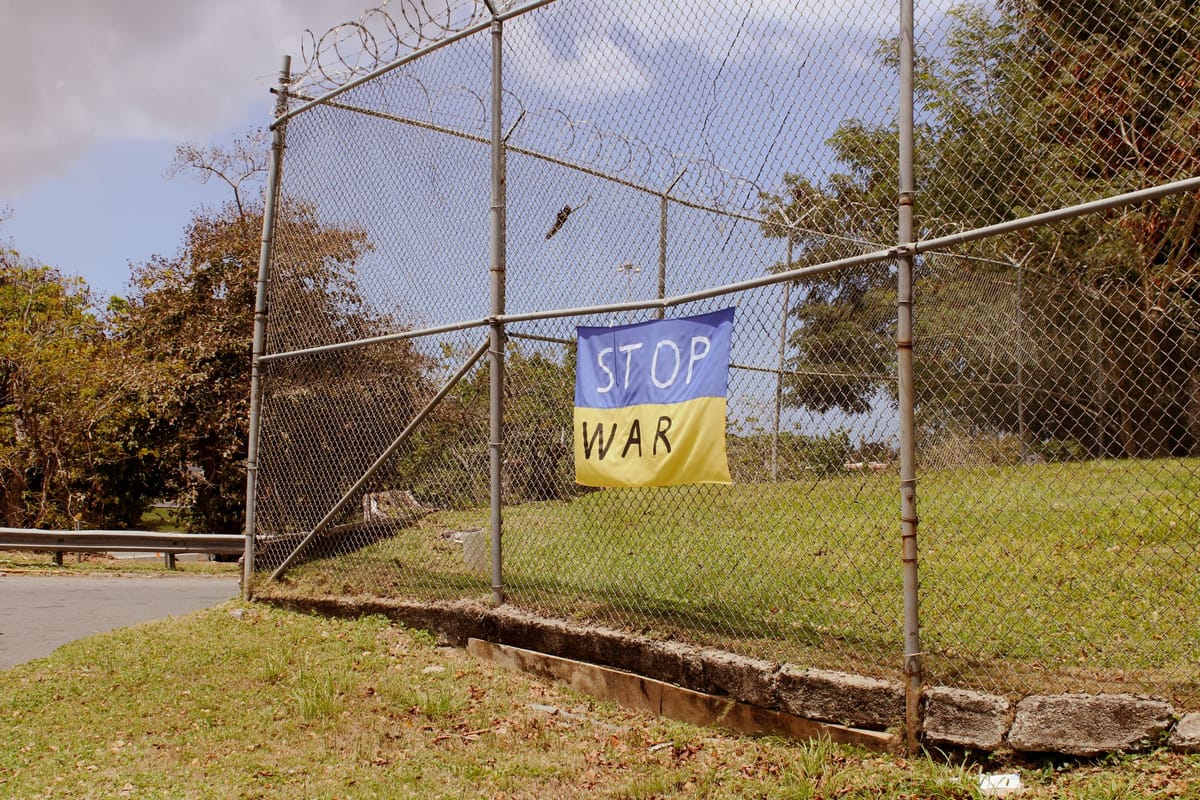
Fences are the classic banner spot — and the windiest. Two rules keep an outdoor banner up:
- Use mesh for large or exposed banners so wind passes through instead of turning the banner into a sail. A solid PVC banner is fine for smaller, sheltered spots; choose a premium UV banner for long outdoor life.
- Fix every eyelet, with a little give. Bungee cords absorb gusts; cable ties pulled bar-tight transfer the whole wind load to the corners, which is how banners tear.
Handling wind
Wind is the number-one killer of outdoor banners. Beyond mesh and flexible fixings: site the banner where it is sheltered if you can, check the fixings after the first windy day, and take a temporary banner down ahead of a storm. A banner that is built and hung for wind lasts; one that fights it tears.
Frequently asked questions
How do I stop my banner sagging? Even tension all the way around — fix the corners first, then work the eyelets inward, pulling gently to remove slack. Hemmed edges and enough eyelets are essential.
How do I hang a banner outdoors in wind? Use mesh for large banners, fix every eyelet with a little give (bungees), and shelter it where possible. Take temporary banners down before a storm.
Can I hang a banner without eyelets? It is much harder and risks tearing — eyelets spread the load. Always order eyelets for anything that hangs.
What's the neatest way to mount on a wall? A fixed-frame display holds it flat and lets you swap graphics; otherwise screw or hook through each eyelet. See the banner range.