"What size should my banner be?" is the most common banner question, and the answer is not a guess — it follows from one thing: how far away your audience is. A banner read from across a car park needs to be far bigger, with far larger text, than one beside a doorway. This guide gives the standard sizes, a simple letter-height rule, and the right size for common jobs. It is part of our complete banner printing guide.
The one rule that matters: distance sets size
Everything about banner sizing comes back to viewing distance. The further your reader, the larger the banner and — more importantly — the larger the text. A simple, reliable rule of thumb for letter height:
About 2.5–3 cm of letter height for every 10 metres of viewing distance.
So text read from 10 m away wants letters around 3 cm tall; from 30 m, closer to 9–10 cm; from 50 m, 13–15 cm. Work out your furthest important reader, size the text to that, and the banner size follows from how much text and image you need around it. A banner whose text is too small for its distance simply does not get read — the most common and costly sizing mistake.
Standard banner sizes
Most banners cluster around a handful of practical sizes:
| Size (approx) | Typical use |
|---|---|
| 2 × 4 ft / 60 × 120 cm | Small indoor signs, table fronts |
| 3 × 6 ft / 90 × 180 cm | Shopfront, event entrance |
| 4 × 8 ft / 120 × 240 cm | Stage backdrop, large shopfront |
| 4 × 10 ft+ / 120 × 300 cm+ | Building façade, large outdoor |
These are starting points, not limits — banners are made to size, so order what fits your space and distance. The everyday PVC banner covers most of this range; for big outdoor spans choose a premium UV banner.

Match the size to the job
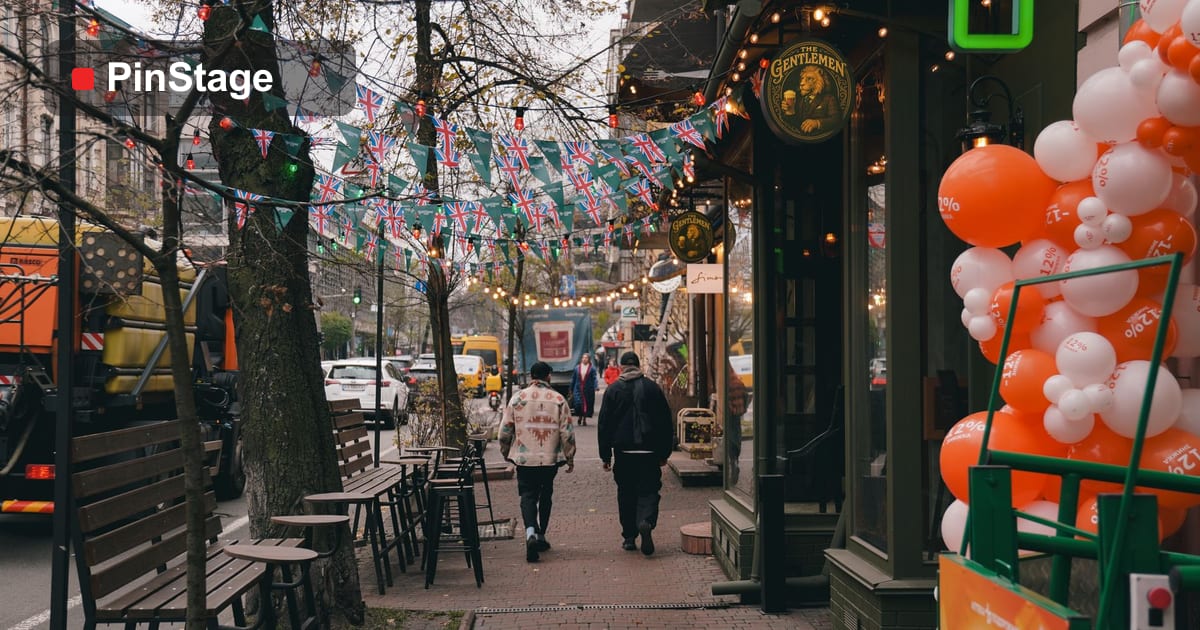
- Shopfront banner — usually as wide as the shop frontage, sized so the name reads from across the street. A 3×6 or 4×8 ft is common.
- Stage / event backdrop — sized to the stage and the room; big enough to frame speakers and read from the back row.
- Fence / hoarding — large, and in mesh if it is exposed to wind; size to the panels of the fence.
- Roadside / façade — the biggest, with the largest text, because the audience is far and moving. Use the distance rule and round up.
- Indoor directional — small, since it is read up close; a 2×4 ft is plenty.
A fixed banner display is sized to its frame, so order the graphic to the frame's dimensions.
Aspect ratio and proportion
Banners can be any shape, but proportion affects readability. Long, low "landscape" banners suit headlines along a frontage; tall "portrait" banners suit narrow spaces beside doors. Design the layout to the shape — a headline that fits a wide banner will not work on a tall one without rethinking.
Don't forget bleed and finishing
The size you order is the finished size. Your artwork should add bleed (extra background past the edge) so trimming and hemming do not eat into the design, and keep text inside a safe area. Eyelets and hems sit at the very edge, so leave room. Our print-ready file setup guide covers it.
Frequently asked questions
How big should a shopfront banner be? Usually the width of your frontage, sized so the name reads from across the street — a 3×6 or 4×8 ft is common.
How do I know if my text is big enough? Use the rule: ~2.5–3 cm of letter height per 10 m of viewing distance. Size text to your furthest important reader.
Is there a maximum banner size? Practically no — banners are made to size and large spans are tiled or seamed. Very large outdoor banners should be mesh to handle wind.
What size for a stage backdrop? Big enough to frame the stage and read from the back of the room; match it to the stage width. Compare options in the banner range.