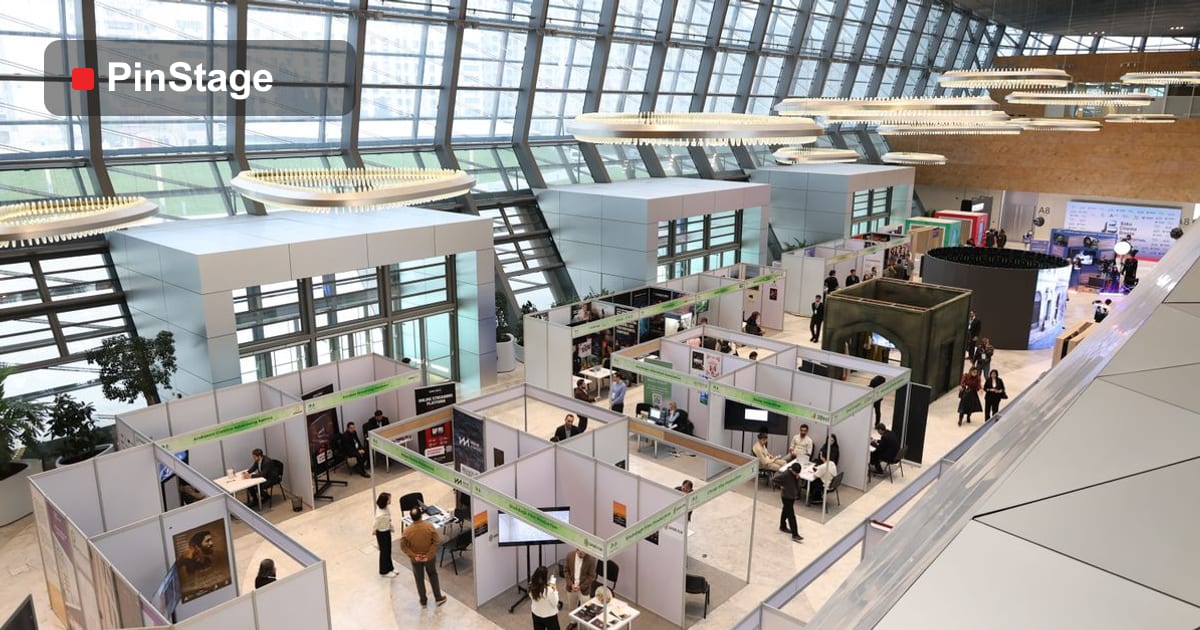
A trade show is one of the few moments in marketing where your buyers come looking for you. Exhibition marketing is the discipline of turning that rare attention into conversations, samples tried and qualified leads — and the uncomfortable truth is that most of the result is decided in the weeks before you arrive. This guide is the complete map: the strategy, the print kit, the people and the follow-up. Each section links to a deeper how-to so you can go as far as you need.
Why exhibition marketing is different
Most marketing interrupts people who were doing something else. A trade show is the opposite: every visitor chose to walk the hall, badge on, ready to look. That changes the job. You are not fighting for attention from scratch — you are competing with the booth on either side of you for a visitor who already wants to buy something. Win by being clearer and more focused than your neighbours, not louder.
Step 1 — Set one measurable goal
Booths fail when they try to say everything to everyone. Before you design a single graphic, decide the one outcome that defines a successful show:
- Demos booked for the sales team to follow up.
- Samples tried so visitors leave with your product in mind.
- Badges scanned into your CRM for nurture.
- Orders or quotes taken on the floor.
Pick one, make it numeric ("80 qualified scans"), and design everything — layout, headline, print, staffing — to serve it. A focused booth out-performs a busier one every single time.
Step 2 — Choose the right booth format
Your space dictates your kit, so confirm the dimensions before you commit to artwork. A standard shell-scheme wall is best filled by a pop-up backdrop; a corner, peninsula or island needs a structured booth system that reads from several angles. The common formats — 3×3, 3×6 and island — and how to lay each one out are covered in exhibition booth sizes & layouts. If you are unsure whether to invest in a full backdrop or simply stand a few banners, read pop-up backdrop vs pull-up banner first.
Step 3 — Print the essentials: the booth kit
Almost every effective booth shares the same core kit. Get these right and the rest is detail.
The backdrop
Your backdrop is the photograph people remember and the surface that appears behind every conversation. Keep one clear value proposition at eye level — roughly 1.2–1.8m from the floor — so it reads in photos and over visitors' heads.
Roll-up banners
Roll-up banners are the workhorse: cheap, portable and perfect at the open edges of the booth to pull traffic from the aisle. One message per banner — a banner that says three things says nothing.
The counter
A printed promotional counter turns a bare trestle into branded furniture, gives staff a base, and hides your boxes and bags. Match its colours to the backdrop so the booth reads as one piece.
Signage and wayfinding
An advertising flag above the stand carries your name over the heads of the hall, and small directional signs guide visitors to demos or sampling. The full packing list, product by product, is in the exhibition booth checklist.
Step 4 — If you serve food or drink
Sampling is the most persuasive thing you can do on a show floor — a tasted product beats any brochure. But a sampling station only works if portions, flow and hygiene are planned. Pre-portion before the rush, keep the queue moving, and choose eco consumables that match your brand. The full method, including quantities, is in the food-sampling booth guide.
Step 5 — Staff the booth properly
The best print in the world cannot rescue a booth where staff sit behind the counter on their phones. Brief your team on the one goal, give them an opening line that is not "can I help you?", and roster breaks so the booth is never unmanned at peak. Two engaged people beat five bored ones.
Step 6 — Capture and qualify leads
A booth with no capture is a wasted spend. Give visitors a clear reason to share details — a sample, a draw, a download — and make the QR code obvious on the backdrop, counter and even a floor sticker. Tag each lead on the spot as hot, warm or browsing so follow-up is targeted. The tactics are in trade show lead capture.
Step 7 — Follow up within the week
Most leads are lost in the days after the show, not on the floor. Send a follow-up while the conversation is still fresh — ideally within the same week — and reference what you actually discussed. A fast, specific message converts far better than a generic mailshot a month later.
A realistic production timeline
- 3 weeks out: lock artwork; order the backdrop and booth system (longest lead time).
- 2 weeks out: order roll-ups, counter and signage; brief the team.
- 1 week out: order spares — a second roll-up and extra handouts always get used — and confirm logistics.
- Show week: pack a repair kit (cable ties, tape, scissors) and arrive early to set up unhurried.
Common exhibition mistakes to avoid
- Too much text. From the aisle you have two seconds; lead with one idea.
- Logo too low or too small. Put it at eye level and make it big.
- A closed front. A counter across the entrance blocks the people you want in.
- No follow-up plan. Decide how leads are captured and who follows up before you arrive.
- Last-minute artwork. Rushed files mean reprints, delays and colour you did not approve.
Give people one thing to remember
The booths that win are not the busiest — they are the most memorable. A single strong idea, repeated across the backdrop, the roll-ups and the takeaway, sticks in the mind; a wall of features does not. Decide the one sentence you want a visitor to repeat to a colleague afterwards, and make every surface support it. If your team can say it in five words, your booth can show it in three. This is also what makes your print reusable: a booth built around an idea survives a rebrand of the details, while a booth crammed with this year's offers is landfill the moment the offer ends.
Budgeting your exhibition spend
Exhibition costs fall into four buckets, and print is usually the smallest:
- Space — the floor rental, by far the largest line.
- Stand — backdrop, booth system, counter and furniture.
- Print and graphics — banners, signage and handouts; the part you control most easily.
- People and travel — staff time, transport and accommodation.
Because space dominates the budget, it rarely makes sense to skimp on the graphics that make that expensive floor work harder. A reusable backdrop and a set of roll-ups cost a fraction of the space rental but decide whether the booth pulls anyone in. The smart move is to spend where it changes the result — a clear backdrop, strong roll-ups and enough handouts — and to buy reusable pieces once rather than disposable ones every show.
What to give visitors to take away
Most of your booth stays behind; what leaves is what keeps working. A printed leaflet, a sample or a small branded item carries your message past the hall and onto someone's desk, where the buying decision is actually made. Keep takeaways small enough to pocket, lead with the one thing you want remembered, and always include a way back to you — a QR code, a short URL, a name. Order more than you think you need; running out of handouts on a busy afternoon is a missed conversation, not a saving.
Measuring ROI after the show
A show you cannot measure is a show you cannot improve. Decide before you go how you will judge it, then capture the numbers: leads against your target (the goal from Step 1), cost per lead (total spend divided by qualified leads), how many leads became quotes and then orders in the following weeks, and softer wins like press, partnerships and competitor intelligence. Hold a short debrief within a week while memories are fresh — what drew people in, what fell flat, which conversations converted. Those notes are the brief for your next, better booth, and the reason a well-made, reusable print kit pays for itself across a season of shows rather than a single afternoon.
Frequently asked questions
How early should I order? Three weeks for the backdrop and booth system; two for the rest. Sooner if the show is in peak season.
Can I reuse the kit? Yes — fabric backdrops and premium roll-ups are built for repeated use; design with a rebrand in mind and you will get several shows from one investment.
What if my budget is small? Start with a backdrop and two roll-ups, staff it well, and capture leads diligently. Discipline beats spend.
Work through the linked guides in order and you will arrive with a booth that earns its floor space. Start by browsing the full Exhibition & Booth range.