
A canvas print takes a photo or design and turns it into a piece of framed wall art — textured, premium, and reading as "artwork" rather than "print". Where a poster is flat, cheap and updatable, canvas is decorative, lasting and feels considered. This guide covers when to choose canvas, the options, and how to get the best result. It is part of our complete posters & mounting guide.
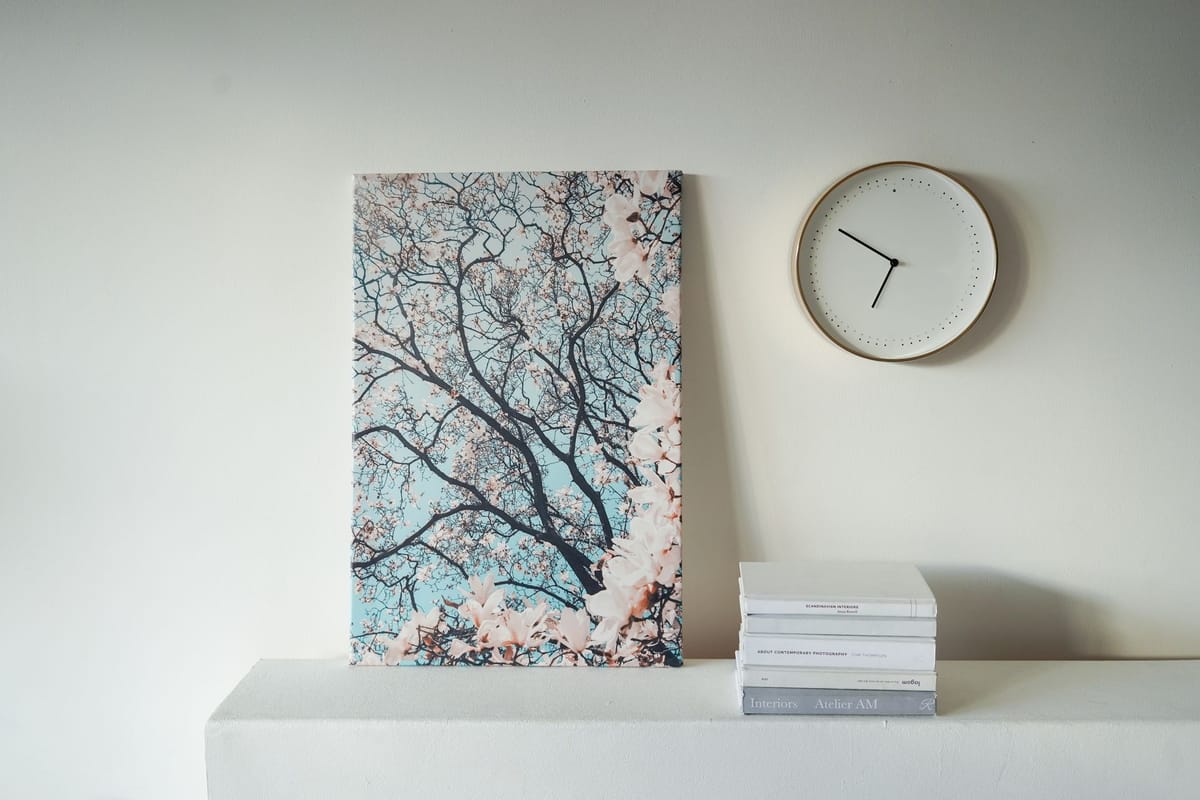
What makes canvas different
A canvas print is your image printed onto canvas fabric and stretched over a wooden frame. Two things set it apart from a poster:
- Texture — the canvas weave gives a tactile, fine-art surface that catches light like a painting, not a flat sheet.
- A finished, framed object — it arrives ready to hang as a self-contained piece, with no separate frame or glass needed.
The result reads as decor, not advertising — which is exactly why it suits homes, restaurants, offices and showrooms. The canvas print is the standard; a premium canvas steps up the material and frame.
When to choose canvas over a poster
- Decor and feature walls — where you want a premium, lasting piece, not a promo.
- Photography — a photo on canvas feels like art; on paper it feels like a print.
- Restaurants, cafés, offices, hotels — canvas lifts the space and feels considered.
- Gifts and home — a personal photo as canvas is a keepsake.
Choose a poster instead when you need something cheap, flat and easy to update — canvas is for the lasting, decorative job, not the weekly promotion.

Gallery wrap vs framed
Canvas comes two main ways:
- Gallery wrap — the image wraps around the edges of the frame, so no border or frame is needed; a clean, modern look.
- Framed canvas — a traditional frame around the canvas for a more classic feel.
Gallery wrap is the popular default for a modern, frameless look; a frame suits more traditional settings. Either way, decide whether the image should wrap the edges (gallery) or sit within a border.
Preparing images for canvas
Because canvas is decorative and often viewed up close, image quality matters more than for a distant banner:
- Use a high-resolution image — canvas shows softness more than a flat poster; supply the best resolution you have (see photo print quality tips).
- Mind the wrap — on a gallery wrap, keep important content away from the edges, which fold around the frame.
- Colour — the texture slightly softens colour; rich, well-exposed images work best.
Caring for canvas
Canvas is durable as wall art — keep it out of direct, harsh sunlight to preserve colour over years, and dust it gently with a dry cloth. As a framed, finished object it needs no glass or extra framing, which is part of its appeal.
Frequently asked questions
What's the difference between canvas and a poster? Canvas is printed on textured fabric, stretched over a frame, and reads as premium framed wall art; a poster is a flat paper print, cheaper and easier to update. Canvas is for decor, posters for promotions.
What is a gallery wrap? The image wraps around the edges of the canvas frame, giving a clean, frameless, modern look — no separate frame needed.
Is canvas good for photos? Yes — a photo on canvas feels like art, with a textured, premium finish ideal for decor, gifts and feature walls.
Do I need a high-resolution image for canvas? Yes — canvas is often viewed up close and shows softness more than a distant poster, so use the best resolution you have. See the poster & canvas range.