Hang a big solid PVC banner on an exposed fence and the first strong gust turns it into a sail — it billows, strains its fixings, and sooner or later tears a corner or pulls the fence. Mesh banners solve exactly this problem: thousands of tiny perforations let wind pass straight through, so the banner stays flat, stays up and lasts. This guide explains when you need mesh, how it works, and how to use it. It is part of our complete banner printing guide.
How mesh works
A mesh banner is printed on a perforated PVC material — a grid of small holes across the whole surface, typically letting around 30% of air through. From a normal viewing distance your eye blends the print into a solid image and the holes disappear; up close you can see through it. The point is not the look — it is the airflow. By letting wind pass through instead of catching it, mesh dramatically cuts the wind load on the banner and its fixings. That is the difference between a banner that survives a season outdoors and one that shreds in the first storm.
When you need mesh
Reach for mesh whenever a banner is large and exposed to wind:
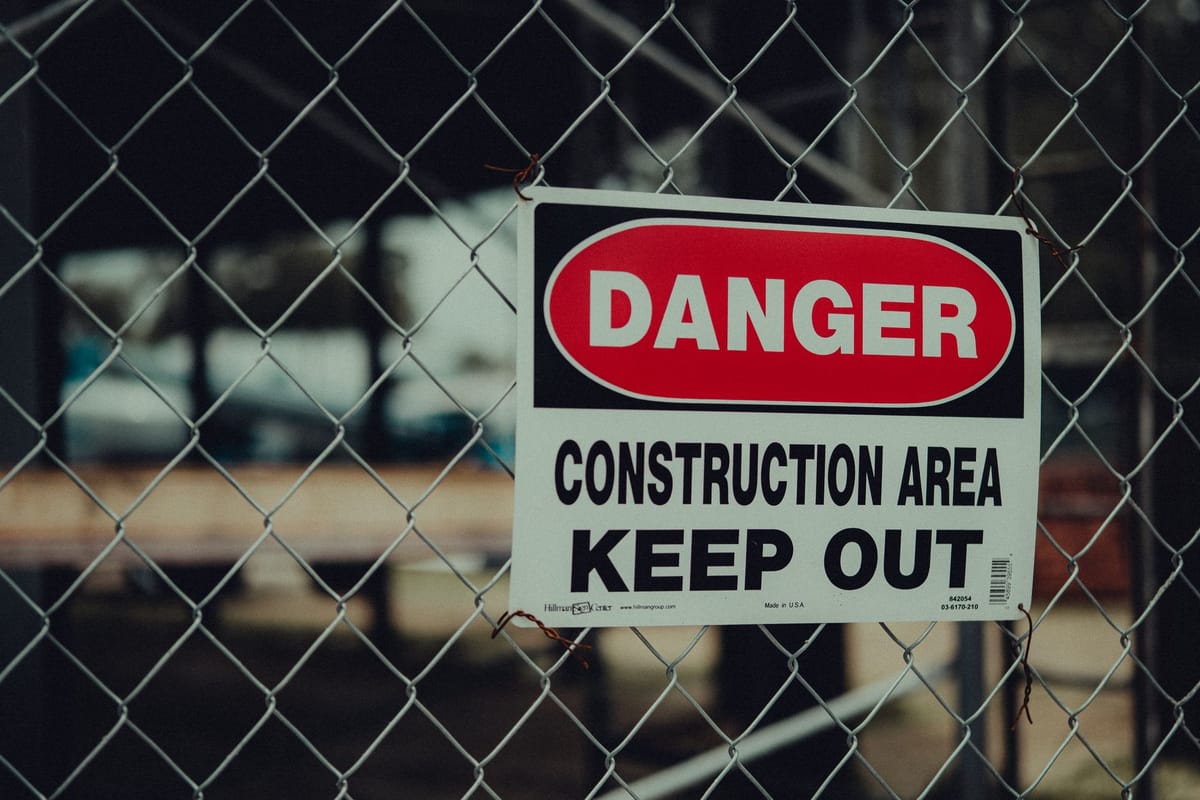
- Construction hoarding and site fences — big, long-term, and fully exposed.
- Stadium and sports-field perimeter fencing.
- Building façades and scaffolding wraps.
- Any large outdoor banner on an open fence or rooftop.
For these, mesh is not a style choice — it is what keeps the banner (and the fence) intact. Pair it with a heavier, UV-stable stock like the premium UV banner for long outdoor life.
When solid PVC is better
Mesh is not always the answer. Choose solid PVC when:
- The banner is small or in a sheltered spot — a shopfront under an awning, an indoor sign.
- You need maximum colour density and fine detail — the perforation slightly mutes both, so for a vivid, detailed graphic at close range, a solid PVC banner is sharper.
- There is no real wind load — indoors, mesh's airflow advantage is wasted.
The rule of thumb: solid for small and sheltered, mesh once it is big and windy. The full material comparison is in our PVC vs mesh vs fabric guide.
Designing for mesh
Because part of every area is holes, design a little bolder than for solid PVC:
- Big, high-contrast graphics read best; fine text and thin lines lose crispness.
- 100 DPI at full size is plenty — the perforation limits fine detail anyway.
- Expect colours to look slightly less dense than a solid proof; choose strong, contrasting colours.
See print-ready file setup for bleed and resolution.
Sizing and fixing
Mesh banners are made to size, so order to the fence panels or façade area you are covering. For fixing:
- Hemmed edges and eyelets every 30–50 cm, with reinforced corners.
- Cable ties or bungees through every eyelet — bungees give a little to absorb gusts.
- Fix all the way around, not just the corners, so the load spreads evenly.
Even though mesh sheds most wind, large spans still need every eyelet fixed. For a permanent, swappable result, a fixed banner display frame can hold a smaller mesh graphic taut. See how to hang a banner for the full method.
Frequently asked questions
Do I always need mesh outdoors? No — only when the banner is large or exposed to wind. Small, sheltered outdoor banners are fine in solid PVC.
Does mesh look worse than solid PVC? From a distance, no — your eye fills in the holes. Up close and for fine detail, solid PVC is slightly sharper and denser.
How much wind does mesh let through? Typically around 30% airflow, which is enough to dramatically cut the wind load versus a solid banner.
Can I see through a mesh banner? Up close, yes; from the viewing distance, the image reads as solid. Compare options in the banner range.