Two stickers can look identical in a proof and behave completely differently on the wall — one lasts five years, the other curls in a month. The difference is the material. This guide explains the vinyl sticker choices in plain language so you specify the right stock before you print. It is part of our custom stickers & decals guide.
White vs clear face
The face is the printable film, and the first choice is opacity.
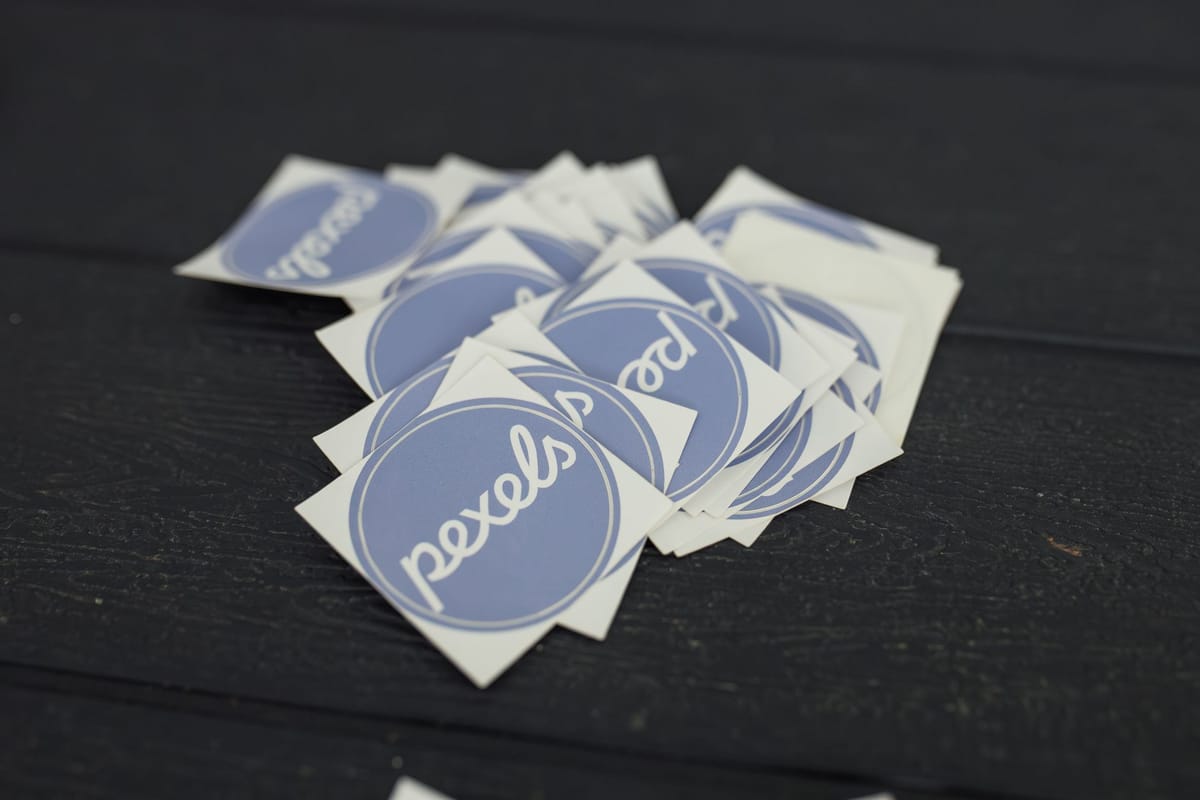
White vinyl is opaque. Colours print onto a solid white base, so they stay true on any surface — a dark window, a coloured box, a metal panel. It is the safe default for logos and text. The everyday vinyl sticker is white vinyl.
Clear vinyl lets the surface show through, so the print looks "painted on" glass or glossy packaging. The catch: standard ink is translucent, so colours dim against a dark background and white simply disappears. For clear stickers that need solid colour or white, you need a white-ink underprint — see the multi-layer white ink clear sticker. For a frameless logo on a shop door, the clear sticker is the premium pick.
Permanent vs removable adhesive
The glue matters as much as the face.
- Permanent bonds hard within 24–48 hours. Use it for long-term signage, outdoor decals and anything that must not be peeled. Removing it later takes heat and patience.
- Removable holds firmly but lifts cleanly for months to a few years, leaving no residue. It is the right call for seasonal promotions, exhibition graphics, and any rented or shared space. The removable sticker is built for this.
A simple rule: if the campaign has an end date, order removable. The small premium is far cheaper than scraping glue off glass.

Calendered vs cast vinyl
This is the durability tier, and it is where outdoor jobs are won or lost.
Calendered (monomeric/polymeric) vinyl is the standard, economical stock. It is flat and stiff — perfect for flat surfaces and short-to-medium-term indoor use. On curves or outdoors for years, it shrinks and lifts at the edges.
Cast vinyl is thinner, more flexible and dimensionally stable. It conforms to rivets, curves and vehicle panels and survives years of sun. It costs more, but for vehicle wraps and long-term outdoor decals it is the only sensible choice.
| Calendered | Cast | |
|---|---|---|
| Cost | Lower | Higher |
| Lifespan outdoors | 1–3 yrs | 5–8 yrs |
| Conforms to curves | Limited | Excellent |
| Best for | Flat, indoor, short-term | Vehicles, curves, long-term |
Don't forget the laminate
The face material gets the attention, but the laminate decides how the sticker survives the real world. A clear over-laminate adds scratch, UV and water resistance, and gives you the gloss/matte/anti-slip finish. For anything touched, walked on or sun-exposed, laminate is not optional — the full story is in lamination & durability.
Applying and removing vinyl, cleanly
The material is only half the result — how it goes on (and comes off) is the other half.
Applying: clean the surface with isopropyl alcohol and let it dry; grease and dust are the main cause of edge-lift. For small stickers, hinge from one edge and squeegee from the centre out. For large window vinyl, wet-apply (a misted surface with a drop of soap) so you can slide the graphic into position before squeegeeing the water and air out. Work in shade — heat makes the adhesive grab before you have aligned.
Removing: removable vinyl peels at a low angle, slowly; warming it with a hairdryer softens the adhesive on stubborn corners. Permanent vinyl needs more heat and patience, and an adhesive remover for any residue. This is exactly why you choose removable stock for anything temporary — the few cents saved on permanent adhesive are lost many times over in removal labour.
A quick vinyl glossary
- Face / film — the printable top layer (white or clear vinyl).
- Liner / backing — the paper you peel the sticker off.
- Laminate — the clear protective layer on top of the print.
- Calendered / cast — the two manufacturing methods; cast is thinner and more durable.
- CutContour — the vector path that tells the cutter the sticker's outline.
Knowing these five words makes briefing a print job far easier.
Which material for which job
A few common scenarios, matched to the right stock:
- Café / F&B branding — clear vinyl on cups and jars for that frameless, "printed glass" look; white vinyl for menus and fridge graphics. Use food-safe placement (on the outside of packaging, not in contact with food).
- Retail window promotions — removable white vinyl so you can swap a sale every season without residue, or one-way vision for a full-window campaign that still lets staff see the street.
- Product labels — white vinyl for opaque colour on any pack; a clear sticker with white-ink underprint for premium "no-label" looks on glass.
- Events & exhibitions — removable vinyl on floors, walls and panels that comes off cleanly at teardown; pair it with your booth graphics.
- Vehicles & outdoor signage — cast vinyl with a UV laminate, every time.
Matching the stock to the job is most of the battle; the rest is the laminate and a clean cut line.
Looking after vinyl in a tropical climate
Malaysia's heat, humidity and UV are tougher on vinyl than temperate climates, and it changes a few choices:
- Always laminate anything outdoors or in a hot car — UV fade is the number-one failure.
- Let adhesives cure for 24–48 hours before washing a freshly applied outdoor decal.
- Clean surfaces matter more in humidity: grease and dust under the film cause edge-lift faster in heat.
- For west-facing windows that bake in the afternoon, choose UV-stable inks and a laminate, or the print will shift colour within a season.
How to choose, fast
- Surface dark or coloured? → white vinyl (or clear with white ink).
- Need to see the surface through it? → clear vinyl.
- Temporary campaign? → removable adhesive.
- Curves or years outdoors? → cast vinyl + UV laminate.
- Flat, indoor, on a budget? → calendered white vinyl, matte laminate.
Frequently asked questions
Why did my clear sticker look washed out? Standard ink is translucent. On a dark surface you need a white-ink underprint to make colours and white opaque.
Is removable vinyl weaker? No — it still holds firmly. "Removable" describes clean release over time, not a weak bond.
Can calendered vinyl go on a car? For flat panels short-term, yes; for curves, rivets and long-term wraps, use cast vinyl or it will lift.
Which laminate should I default to? Matte for interiors and packaging (no glare, premium feel); gloss when you want maximum colour pop; anti-slip for floors.
Compare the full sticker range, or read the die-cut vs kiss-cut guide to finish specifying your order.